LONG BIO – Sir Emmanuel Neville Cenac, GCMG, GCSL
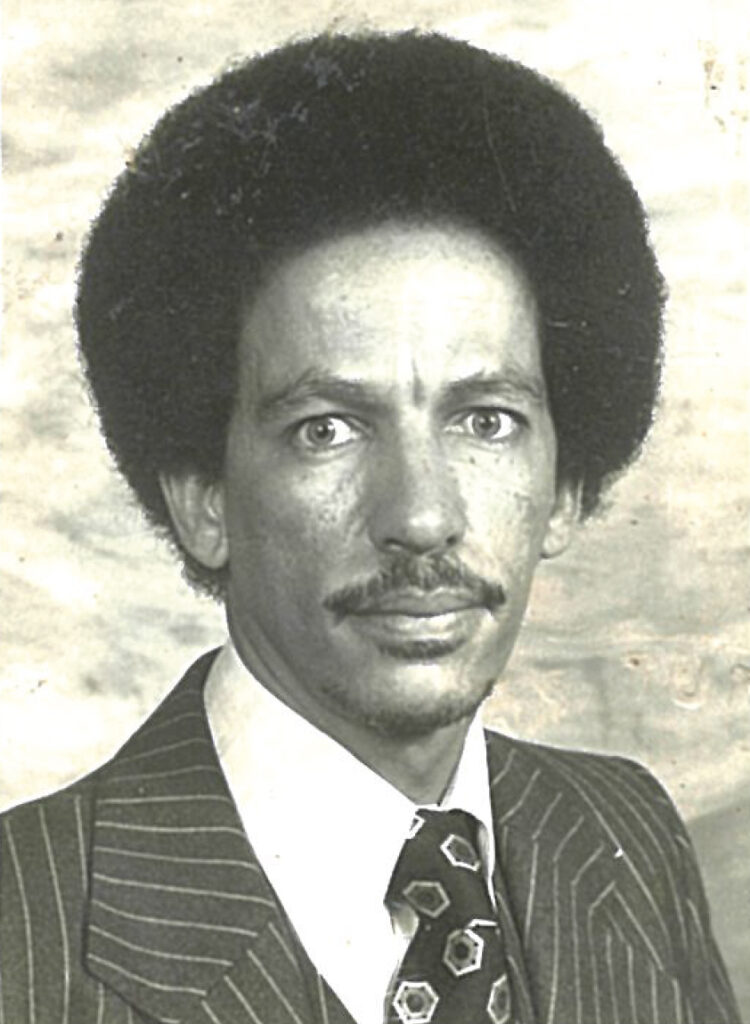
Sir Emmanuel Neville Cenac was born on 24 November 1939 in Castries, Saint Lucia, into a family with deep roots in Soufrière. He was the youngest of eight children born to Oculie “Frank” Cenac and Marie-Thérèse (Léonise) Cenac, née King, and was raised in the community of Marchand in a home marked by affection, discipline, and a strong sense of togetherness.
He attended St. Aloysius Roman Catholic Boys’ School from 1947 to 1952 and later entered St. Mary’s College on a Vestry Scholarship, graduating with the Cambridge School Certificate in 1958.
Sir Neville began his professional life in the Saint Lucia Civil Service in May 1958. Over the course of a decade, he gained broad experience in government administration through his work in the Audit, Customs, and Treasury departments, as well as in the Registry of the High Court.
Beyond his departmental duties, he was active in advocating for the rights of public officers. He was a founding member of the Civil Service Credit Union. Within its sister organisation, the Civil Service Association, he served as General Secretary for seven consecutive years, reflecting a sustained commitment to protecting public servants from arbitrary treatment and promoting fairness in the workplace. During this period, he also served as the first Secretary of the Supervisory Committee of the Credit Union, underscoring a lifelong concern for justice, accountability, and service.
In 1968, Sir Neville transitioned from the civil service to active politics. In his letter of resignation to the Chairman of the Public Service Commission, he wrote: “I am leaving the service because of political interference. But as long as I live, I shall keep a vigilant watch on the way in which my country is run.”
From 1968 to 1972, he worked alongside Labour Party leader Kenneth Foster to strengthen the Saint Lucia Labour Party and its capacity to challenge the political dominance of the United Workers Party (UWP).
He served as a City Councillor following a landslide victory in 1971 and is remembered as having donated his full earnings from that office to charity.
He left the Saint Lucia Labour Party in 1972 after the leadership declined to support then Justice Allan Louisy for the party leadership. He subsequently formed the St. Lucia Labour Action Movement (SLAM) with members of the defunct Forum, led by George Odlum and Hilford Deterville. SLAM adopted the constitution of the Saint Lucia Labour Party.
While SLAM included several prominent figures, Sir Neville later observed that its system of “collective leadership” left the movement without clear direction and limited its political effectiveness. Concluding that a divided opposition would likely prolong UWP dominance, he worked to bring these political forces together.
These efforts culminated in 1973 in a political rapprochement that brought Peter Josie and the Odlum brothers into the Saint Lucia Labour Party, alongside Kenneth Foster and Allan Louisy, who, according to this account, resigned from the judiciary at Sir Neville’s request.
His efforts during this period helped strengthen the SLP’s position in opposition and contributed to the party’s eventual landslide victory in the 1979 general election, a moment of lasting significance in Saint Lucia’s political history.
After helping to broker this arrangement in 1973, Sir Neville left for London, where he married Julita and later pursued legal studies. However, intense internal strife within the Saint Lucia Labour Party following its 1979 election victory ultimately led him to abandon those studies.
He became affectionately known as “Chandel Mòl,” a moniker he coined for himself during a public meeting in 1972. Contrary to some popular assumptions, the name was not a reference to his complexion, nor was it a pejorative label given by political opponents.
The name was inspired by a metaphor comparing Saint Lucia’s political condition to a physical ailment. Speaking on a veranda opposite the Geest Building in Castries, Cenac reportedly stated in Creole: “Péyi-a ni an kou wèd, èk i bouzwen an chandèl mòl. Èk sé mwen ki chandèl mòl la.” In translation, this suggested that the country had a “stiff neck” and needed a “soft candle” (chandel mòl) to act as an emollient or rubbing agent (fiksyon) in treating it.
He served as Manager of Radio Saint Lucia from 1980 to 1982 and held the office of Mayor of Castries from 1981 to 1982.
Following the 1982 general election, he was elevated to the office of Leader of Her Majesty’s Opposition.
Throughout his public life, he maintained a strict approach to the management of public funds. Upon joining the City Council, he instituted a system requiring all expenditure to be submitted for Council approval. In Parliament, he frequently used his position to raise questions of governance and financial probity, and he is credited with being the first Leader of the Opposition to submit a Public Accounts Committee report to Parliament. These actions reflected a public philosophy rooted in duty, scrutiny, and respect for the institutions of state.
During this period, he worked to rebuild the party’s foundations as its Political Leader. Guided by a strong commitment to accountability, he sought to formalise financial oversight within both party and government structures. He proposed the establishment of a Public Works Committee, a Contracts Committee, and a Corruption Committee of the House so that major projects and expenditures would be subject to scrutiny. He later expressed disappointment that these recommendations were rejected, recalling that the leadership at the time wanted “the same power that Compton has” without being subject to comparable controls.
In 1984, he amended the party’s rules to allow an unelected member to become political leader and voluntarily ceded the leadership to Julian Hunte in an effort to promote unity and devote more time to his young family.
Sir Neville represented the constituency of Laborie in Parliament. In 1987, during a period of significant internal party conflict and national political instability, he crossed the floor of the House of Assembly, citing several reasons, including the need to help preserve stable governance in Saint Lucia.
He served as Minister for Foreign Affairs from 1987 to 1992, representing Saint Lucia internationally with steadiness and discernment. Sir John Compton is reported to have held Sir Neville’s diplomatic abilities in high regard, telling foreign aid officials that he had given them “a man better than myself” to manage the nation’s international assets and relations.
Sir Neville was part of the CARICOM delegation involved in efforts to restore democracy in Haiti in 1991 under President Jean-Bertrand Aristide. In 1990, through a Memorandum to Cabinet, he supported the OECS decision to suspend diplomatic relations with North Korea following what was described as criminal conduct against South Korea. In response to Iraq’s invasion of Kuwait in August 1990, he later made a strong statement at the United Nations in support of intervention, reportedly using the words “by any means.”
Sir Neville took pride in participating in the international movement against apartheid in South Africa. He used his public platform to speak against assaults on the dignity of Black people and to affirm their equality and worth.
In 1990, while serving as a minister, he reportedly submitted his full financial records to a court of justice in order to defend himself against allegations of corruption and to demonstrate his integrity.
His parliamentary service also included his tenure as President of the Senate from 1993 to 1997, extending a career marked by participation at many of the highest levels of national life.
After retiring from active politics, he continued, in his own words, to keep “a vigilant watch on the way his country was run” and was later credited with helping to persuade Sir John Compton to return to lead the United Workers Party (UWP) in 2005.
He published a series of articles, including “Of Parliamentary Budgets” (May 2013); “Our Pope Francis is a Chef d’Oeuvre” (Catholic Chronicle, 13 January 2014); “Can St. Lucia Live By Bread Alone?” (Voice of St. Lucia, 29 November 2014); “Beaches – An Un-bequeathable Inheritance” (Voice of St. Lucia, 12 December 2014); “Are Atheists God’s?” (The Star, 30 May 2015); “Is It Our Constitution or Men Who Need Remodelling?” (Voice of St. Lucia, 31 October 2015); “The IMPACS Report: Diplomatic, Not Legal Solution Needed” (Voice of St. Lucia, 5 December 2015); “Proposals for a New Constitution,” (published in two parts in The Voice St. Lucia on 30 April 2016 and 7 May 2016); “Ah! Section 36(1) is Essential: Re Appointment of Deputy Speaker” (The Star, July 2016); and “Respectfully, Your Ejusdem Generis is Useless, Dr. John” (The Star, 13 August 2016).
In 2018, Sir Neville was appointed Governor-General of Saint Lucia, serving as the representative of the Crown until 2021. Upon assuming office, he was awarded the Knight Grand Cross of the Most Distinguished Order of Saint Michael and Saint George (GCMG) by Queen Elizabeth II. He was also bestowed the Grand Cross of the Order of Saint Lucia (GCSL), the country’s highest national honour, in recognition of a lifetime of public service.
Throughout his term as Governor-General, Sir Neville emphasised the non-partisan nature of the office. He viewed the position not as a sinecure, but as one requiring independent judgment and fidelity to the nation’s constitutional framework. In his memoir, he wrote: “I found it most strange when I was asked whether I was willing to swear in Honourable Philip J. Pierre as Prime Minister of Saint Lucia. Strange indeed, when it is the duty of a Governor-General so to do. And so I, as Governor-General of Saint Lucia, mindful of my duty to the office and mindful of the non-partisan role of the office, performed my duty without any aversion to the occasion or hostility towards the recipient.”
Sir Neville published his autobiography and memoir, C’est l’heure: Crossing the Divide, chronicling his four-decade political journey in Saint Lucia. At the book’s launch in November 2024, Professor Cynthia Barrow-Giles described it as “a book worth reading, compelling, rich in detail and an excellent contribution to the understanding of party politics in twentieth century St Lucia.”
Throughout his life, Sir Neville remained committed to democratic socialist principles, guided by the belief that “the good of the people is the supreme law.” A gifted orator in both English and Creole, he used his voice to advocate for the poor and the marginalised and to speak to the moral responsibilities of public life. He was also a man of deep faith and a devoted husband and father. Together, he and his wife, Julita, raised five children: Winston, Suzette, Cybelle, Sardia, and Seryozha. He will be remembered for his long and varied service to Saint Lucia, for the seriousness with which he approached public duty, and for the convictions he carried faithfully throughout his life.